The Shifting Landscape of IT Auditing — It Auditing Emerging Technologies
IT auditing has never stood still, but the pace of change today is unlike anything the profession has encountered before. From artificial intelligence to interconnected devices spanning factory floors and city infrastructure, the technologies underpinning modern organizations are evolving faster than most audit frameworks can comfortably keep pace with. For system administrators, IT managers, and audit professionals, understanding where the field is heading – and preparing for it – is no longer optional. It is a core part of the job.
This article explores the emerging technologies reshaping IT auditing, the practical impact of generative AI on audit workflows, and the cybersecurity frameworks every auditor must have in their toolkit. Whether you are managing an internal audit function or working alongside external auditors, staying informed on these trends will help you build more resilient, compliant, and secure IT environments.
Emerging Technologies Every IT Auditor Must Understand
Several technologies are converging to create both new opportunities and new risks for organizations. Understanding their implications is essential for anyone involved in IT governance, risk, or compliance.
Generative AI and Machine Learning
Artificial intelligence – particularly generative AI – is moving from novelty to necessity in audit environments. These tools can process enormous volumes of log data, transaction records, and system outputs far more quickly than any human team. For auditors, this means routine tasks like anomaly detection, pattern analysis, and even preliminary report drafting can increasingly be delegated to AI-assisted platforms. The key caveat is governance: AI tools used in audit contexts must comply with organizational data handling policies, and proprietary data should never be fed into public AI models without explicit authorization from the organization.
Blockchain Beyond Cryptocurrency
Most IT professionals associate blockchain with digital currencies, but its applications in auditing are considerably broader. Blockchain’s core property – a tamper-resistant, distributed ledger – makes it highly relevant for supply chain verification, smart contract auditing, and ensuring data integrity across decentralized systems. For auditors, blockchain introduces both a new control surface to evaluate and a potential tool for strengthening evidence trails in compliance processes.
Zero Trust Architecture
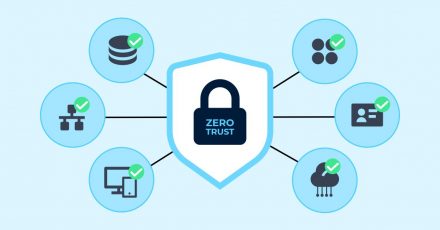
Zero Trust is built on a simple but powerful principle: no user or device should be trusted by default, regardless of whether they are inside or outside the network perimeter. Every access request must be continuously verified. For IT auditors, this means assessing whether organizations have implemented adequate identity verification, micro-segmentation, least-privilege access controls, and ongoing monitoring. Zero Trust is no longer a cutting-edge concept – it is rapidly becoming a baseline expectation in security-conscious environments, and auditors need to evaluate compliance with this model accordingly.
Internet of Things and Industrial IoT
The proliferation of connected devices – from building management systems to manufacturing sensors – has expanded the attack surface organizations must defend. Industrial IoT in particular introduces risks to critical infrastructure that traditional IT security controls were never designed to address. Auditors evaluating IoT environments need to assess device inventory management, firmware update practices, network segmentation, and the specific risks introduced when operational technology converges with corporate IT networks.
Quantum Computing and Post-Quantum Cryptography
Quantum computing remains in its early stages, but its long-term implications for cryptography are significant. Current encryption standards – including RSA and elliptic curve cryptography – could eventually be rendered ineffective by sufficiently powerful quantum systems. Auditors should be monitoring their organizations’ readiness for post-quantum cryptographic standards, which are now being formalized by bodies such as NIST. Organizations that handle long-lived sensitive data are particularly exposed to so-called harvest-now-decrypt-later threats and need to begin transition planning well in advance.
DevOps and CI/CD Pipelines
The widespread adoption of DevOps practices and continuous integration/continuous delivery pipelines presents a particular challenge for traditional audit approaches. When code is being deployed multiple times a day, point-in-time audits become insufficient on their own. Auditors working in DevOps environments need to evaluate whether security controls are embedded into the development pipeline itself – including automated code scanning, dependency checking, secrets management, and deployment gate controls.
How Generative AI Is Transforming Audit Workflows
Beyond its status as an emerging technology to audit, generative AI is actively changing how audits are conducted. Several practical applications are already being explored by forward-thinking audit teams:
- Automated risk assessment: AI tools can flag suspicious patterns in financial systems, access logs, and transaction data that manual review might miss – particularly valuable in fraud detection scenarios where volume makes manual inspection impractical.
- Evidence collection: Gathering audit evidence from disparate systems is traditionally one of the most time-intensive parts of any engagement. AI-assisted extraction and summarization tools can compress this timeline significantly while improving completeness.
- Compliance testing: Automated compliance checks against regulatory requirements can free audit teams to focus on higher-complexity judgement calls that require human expertise and contextual understanding.
- Continuous monitoring: Rather than relying on periodic snapshots, AI-driven monitoring tools can provide near real-time visibility into control effectiveness and emerging risks as they develop.
- Tailored recommendations: Generative AI can contextualize audit findings against an organization’s specific risk profile, helping produce more actionable remediation guidance that reflects actual operational conditions.
For organizations looking to optimize their IT governance posture, combining AI-assisted audit tools with sound foundational practices – including reliable disaster recovery planning and documented IT controls – creates a significantly stronger overall risk management framework.
Cybersecurity Frameworks at the Core of Modern Audits
No discussion of advanced IT auditing is complete without addressing the cybersecurity frameworks that structure how organizations identify, protect against, detect, respond to, and recover from security incidents. Two frameworks dominate most enterprise environments and serve as primary reference points for audit assessments.
NIST Cybersecurity Framework (CSF): Originally developed for critical infrastructure operators, the NIST CSF has become a de facto standard across industries. Its five core functions – Identify, Protect, Detect, Respond, and Recover – provide a practical structure for both designing controls and auditing their effectiveness against real-world threat scenarios.
CIS Controls: The Center for Internet Security Controls offer a prioritized set of actions that organizations can implement to reduce their exposure to known attack techniques. Auditors use the CIS Controls both as a benchmark for control evaluation and as a remediation roadmap when gaps are identified during an assessment.
Understanding these frameworks is not just about passing an audit – it is about building IT environments that can withstand real-world threats. Organizations that approach a formal IT audit with these frameworks already embedded in their operations tend to surface fewer critical findings and resolve identified issues more efficiently.
Beyond frameworks, auditors evaluate three categories of controls: technical controls such as firewalls, encryption, and access management systems; administrative controls such as security policies, staff training programs, and incident response procedures; and physical controls such as facility access restrictions and equipment security. Effective audits assess not just whether controls exist on paper, but whether they are operating as intended and providing layered defense in depth.
Practical Steps to Stay Ahead of the Curve
For IT professionals and managers looking to build competency in these emerging areas, a proactive approach to continuous learning is essential. Several high-value strategies are worth prioritizing over the next twelve months:
- Pursue targeted certifications: Credentials such as Certified Information Systems Auditor (CISA), Certified Cloud Security Professional (CCSP), and Certified Ethical Hacker (CEH) signal credibility and build structured knowledge in areas directly relevant to modern audits. ISACA also offers focused certificates in AI fundamentals, IoT, cloud, and blockchain.
- Engage with professional communities: Organizations like ISACA, ISC2, and the Cloud Security Alliance offer local chapters, online forums, and peer networks that provide real-world insights well beyond what formal training programs cover alone.
- Experiment with open source tools: Hands-on experience with AI libraries, security testing platforms, and blockchain implementations builds practical intuition that purely theoretical study cannot replicate.
- Attend security events: Industry conferences and community events – including regional BSides gatherings – offer direct access to practitioners working at the cutting edge of audit and security research, often in informal settings conducive to genuine knowledge exchange.
- Monitor emerging standards: NIST’s post-quantum cryptography project, CISA vulnerability bulletins, and ISACA’s emerging technology certificate programs all provide structured ways to stay current on fast-moving developments.
For organizations managing sensitive data across distributed infrastructure, ensuring that cloud backup solutions and recovery procedures are audit-ready is an important part of demonstrating control effectiveness to both internal and external reviewers.
Building an Audit-Ready IT Environment
The most effective approach to IT auditing is not reactive – it is continuous. Organizations that treat security controls, compliance documentation, and risk assessments as ongoing operational activities rather than periodic exercises are far better positioned when formal audits occur. Emerging technologies like generative AI, Zero Trust architectures, and IoT platforms introduce new audit surfaces, but they also offer powerful new tools for managing risk more effectively than was previously possible.
IT auditing in the years ahead will belong to professionals and organizations willing to invest in continuous learning, adopt structured frameworks, and leverage new technologies thoughtfully. The fundamentals of sound control design remain constant – but the methods for testing, monitoring, and improving those controls are evolving at a rapid pace.
If your organization is looking to strengthen its IT governance posture, address emerging technology risks, or prepare for an upcoming audit engagement, the SSE team is ready to help. Contact us today to discuss how we can support your IT security and compliance objectives.
Related reading: GitHub Discussions: Community Engagement for IT Teams | How to Manage DNS and DHCP: IT Admin Complete Guide | Citrix NetScaler: Complete Admin Guide for IT Teams